
2. Skills and competences of e-volunteers
STEP 1: Profile your ideal e-volunteer
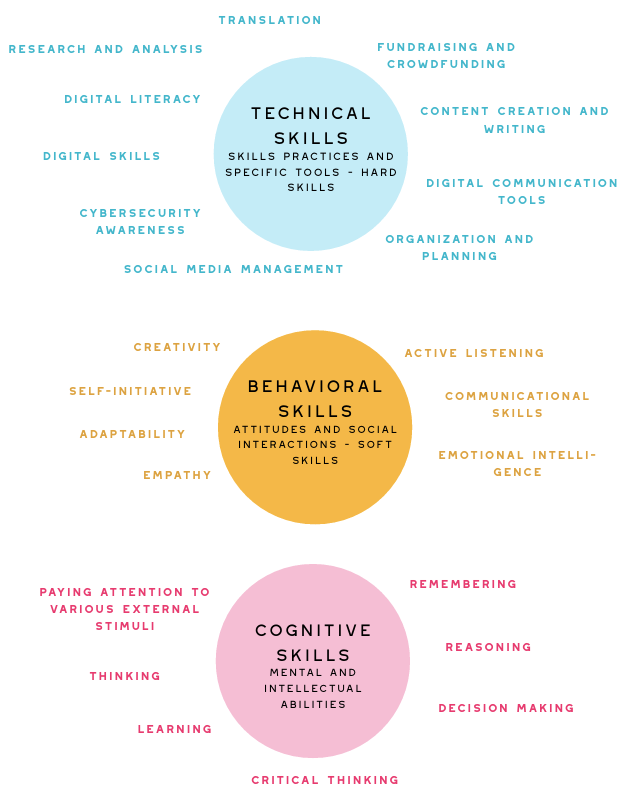
In order to up-skill our e-volunteers, it is important to have a clear understanding of which skills are relevant in the development of the tasks they are involved in. As in e-volunteering there’s a lack of physical contact that can make building connections harder, it’s essential that the e-volunteer has a combination of technical (hard skills), behavioral (soft skills) and cognitive skills in order to be able to perform in a quality manner.
Take a second to think about your e-volunteers and make a list of their skillset!
STEP 2: Identify the skill gaps
Once the skills that they should have are clearly settled, it’s time to identify the skill gaps in our e-volunteers. There are many ways to do this, but a combination of methods is definitely the most effective way to go:
Open discussion with your e-volunteers:
Once the skills that they should have are clearly settled, it’s time to identify the skill gaps in our e-volunteers. There are many ways to do this, but a combination of methods is definitely the most effective way to go:
Regular skill assessment sessions online:
perform regular checks online and identify their challenges.
Quizzes to identify the gaps:
find some online or create your own, based on your specific needs and requirements.
Ask for feedback:
what do the users of your services, your target group or the other members of your team have to say about the performance of your e-volunteers?
TIP!
If you need more inspiration for this process, check out these resources:
Digital Skills Assessment Tool
Situation-Behavior-Impact (SBI) Feedback Model
Don’t forget these amazing educational materials to learn more:
UpDatAed – Guide for Youth Organizations on Digital Safety and Privacy – improving practices of youth organizations in the collection and further use of personal data and to make their operation safer.
Turning Digital – online e-learning platform – raising the quality of adult e-learning by improving capacities of adult educators to embrace innovative digital tools and transfer their work online.
Policy Recommendations for the Protection of Young People’s Mental Health in the Online World
Educ@te platform – an e-learning tool for raising the capacities of HRE to work in the online environment.